
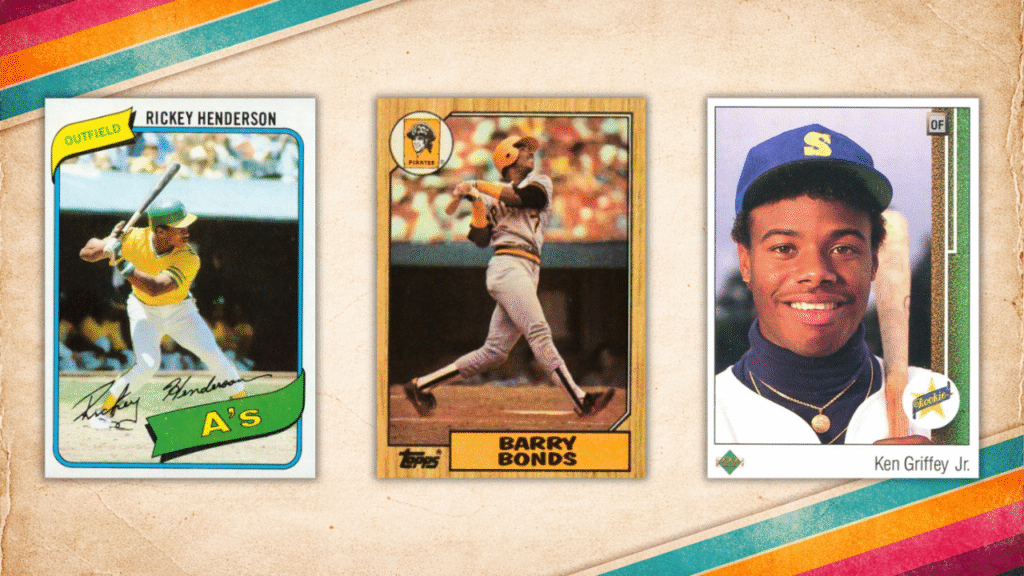
By the time the 1980s rolled around, baseball cards weren’t just souvenirs tucked next to a stick of gum anymore, they were becoming the backbone of a full-blown industry.
Card shops started popping up in strip malls. Kids traded rookies on the playground like currency. Adults began to realize that a shoebox full of cardboard could actually hold value.
The 80s had no chrome, no autographs, no one-of-ones. Just card stock, photography, and stats on the back. But this was the decade that planted the seeds of the collecting boom.
The rookie cards we chased then remain essential today, not because they’re scarce, but because they connect us to an era when the hobby was finding its identity.
Here’s a look at the baseball cards that turned the 1980s into one of the most important decades for collectors.
Key 80s Baseball Cards
1980 Topps Rickey Henderson #482
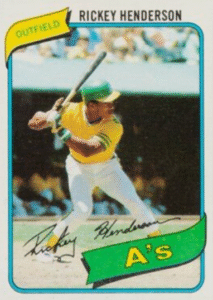
Rickey Henderson wasn’t just fast, he was a menace on the bases. Every stolen base felt like theater, and his rookie card captured the start of that chaos.
The 1980 Topps design is clean and simple, a fitting canvas for the last solo Topps rookie before Fleer and Donruss broke the monopoly.
For collectors in the early 80s, pulling a Rickey felt like gold. Decades later, it still does, especially in high grades.
It’s one of the most valuable cards of the 1980s.
1982 Topps Traded Cal Ripken Jr. #98T
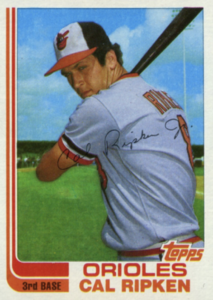
In the flagship set, Cal had to share space on a “future stars” card. But in the Traded set, he finally stood alone, which helps make this his key rookie.
When card shops began multiplying in the mid-80s, Ripken’s Traded rookie was one of the first cards that dealers displayed proudly in their glass cases.
It remains one of the most sought-after cards of its era.
1983 Topps Ryne Sandberg #83 | Wade Boggs #98 | Tony Gwynn #482
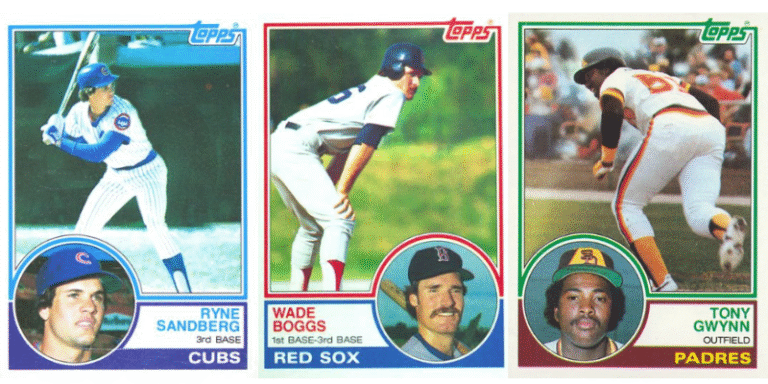
1983 Topps’ holy trinity of rookie cards, the mid-80s set produced the rookies of three all-time great hitters in one release: Tony Gwynn, Wade Boggs, and Ryne Sandberg.
The simplistic design and photography on the cards don’t impact their popularity; They remain an essential staple of 80s baseball cards.
1984 Donruss Don Mattingly #248
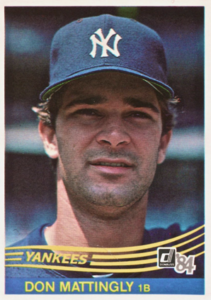
When I think back to collecting as a kid, for me, this is the first card I think of.
Donnie Baseball owned the middle of the 80s. Before Griffey Jr. showed up, Mattingly’s rookie was the card you had to have. The 1984 Donruss design looked sleeker and sharper than Topps, and collectors took notice.
Stories still float around about kids mowing lawns or trading entire shoeboxes of commons just to get one. For many, this was their first “big” purchase at a card shop. It wasn’t just cardboard, it was a status symbol. It remains a must-have today.
1985 Topps Mark McGwire Team USA #401
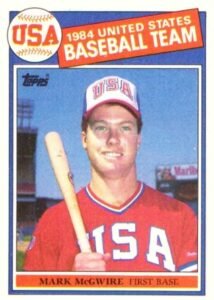
At the time, it was unusual: a kid in a Team USA uniform instead of a big-league jersey. But when McGwire started crushing home runs in the late 90s, this card exploded.
It felt unusual having a national team rookie card in the 80s, which only adds to its allure.
In the late-80s, it was one of the cards that kids dreamed of owning, and it still stands alongside some of the greatest cards of the decade in terms of popularity.
1986 Donruss Jose Canseco #39
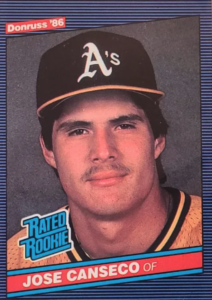
If there was one card that screamed 80s swagger, it was Canseco’s Donruss rookie. The black borders chipped if you looked at them the wrong way, which made mint copies even more desirable.
It’s another card that everyone wanted and when Canseco started launching balls into the upper deck, demand went wild.
For a brief moment, it felt like the hobby revolved around him.
1987 Topps #320, Fleer #604 & Donruss #361 Barry Bonds
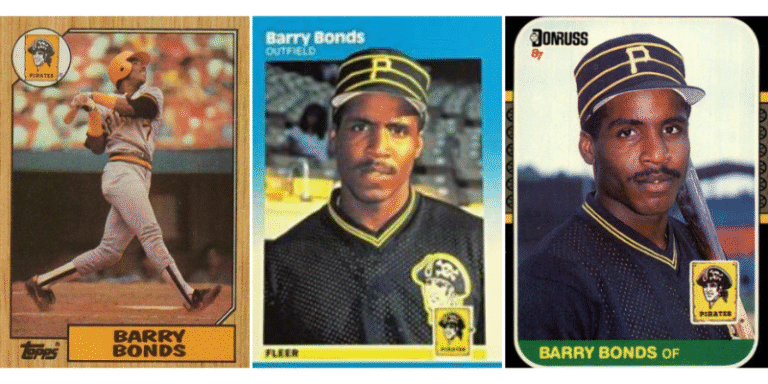
Before the headlines and controversies, Barry Bonds was already showing he was something different. His Topps. Donruss and Fleer rookie cards were a favorite among collectors – everyone I knew wanted his cards.
In the late 80s, Bonds rookies were the kind of cards you’d trade for with hesitation, not because they were scarce, but because deep down, collectors knew this guy was going to be a star.
The iconic woodgrain border of the ‘87 Topps card, and the error card from Donruss remain hot topics today.
1989 Fleer Bill Ripken #616
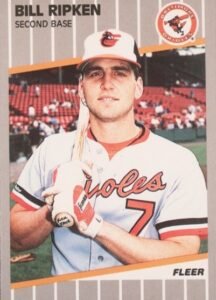
Not every iconic card of the 80s was about superstardom. Some were about controversy, and nothing defines that better than the Bill Ripken error.
With the now-famous obscenity written on the knob of his bat, this card quickly became one of the most talked-about releases of the decade. Fleer scrambled to correct it, leading to multiple variations, but the original “FF” version became hobby legend.
It wasn’t a rookie. It wasn’t rare in the traditional sense. But it was unforgettable. Kids couldn’t believe it existed, and adults couldn’t believe it slipped through.
To this day, it remains one of the most recognizable, talked-about, and collected error cards in hobby history.
1989 Upper Deck Ken Griffey Jr. #1
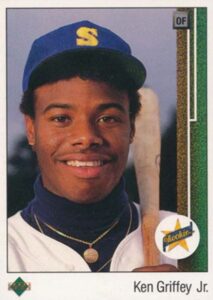
Then came Junior. If one single card is the face of the baseball card boom, and the Junk Wax Era, then here it is.
Upper Deck’s debut release wasn’t just another set – it was a revolution. Glossy card stock, sharp photography, an anti-counterfeit hologram – it felt premium. And card #1 was Ken Griffey Jr., with a smile that seemed tailor-made for the hobby.
Collectors who opened 1989 packs still talk about the thrill of pulling a Griffey. It was like holding the future in your hand. For many, this was the moment they fell in love with the hobby for good.
It’s also a symbol for the period of huge overproduction and low card values, but ultimately it changed the game forever.
Why the 80s Changed Collecting Forever
The 1980s were the bridge between the “gum and cardboard” years and the premium, insert-heavy era that followed. Local shops flourished. Price guides started hitting newsstands. Collectors, both kids and adults, were learning that cards could be both fun and valuable.
The rookies of Henderson, Ripken, Mattingly, McGwire, Canseco, Bonds, and Griffey weren’t just pieces of cardboard. They were proof that the hobby had arrived, and that it wasn’t going away anytime soon.
The 80s were far from perfect. Overproduction loomed. But the decade’s icons remain touchstones in the hobby, reminding us where modern collecting truly began.