
The sports card market has gone through huge swings over the past few decades.
Some sales pushed the hobby forward overnight. Others exposed just how volatile prices can be when demand spikes or cools off.
Here are ten crazy sports card auctions that shocked the hobby.
Ten Shocking Sports Card Auction Results
*listed in chronological order
T206 Honus Wagner - PSA 8
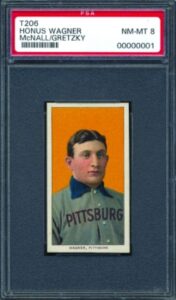
$1,265,000 (July 2000, REA)
This sale might seem modest compared to today’s numbers, but its impact was huge. It was the first sports card ever to sell for over $1 million at auction.
At the time, it redefined what collectors thought was possible. The Wagner became the benchmark for high-end collecting and held that status for years.
Looking back, this sale laid the foundation for everything that followed in the premium card market.
2009 Bowman Chrome Draft Picks Prospects Superfractor Autograph Mike Trout #BDPP89 - BGS 9
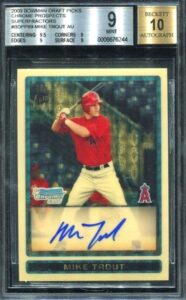
$3,936,000 (August 2020, Goldin)
Mike Trout’s 1/1 Superfractor Bowman Prospects autograph card helped kick off the modern boom.
The hobby knew of the card’s significance, but $3.94 million was huge – at the time of the sale, it became the most expensive sports card of all time, leapfrogging a $3.12m T206 record that had stood for four years.
It became proof that modern cards could reach levels once reserved only for vintage icons.
1979 O-Pee-Chee Wayne Gretzky #18 - PSA 10
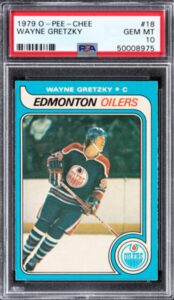
$1,290,000 (December 2020, Heritage)
When this Gretzky rookie sold for $1.29 million, it was a major moment for hockey cards. It became the first 7-figure hockey card sold at auction.
Although the card has sold for much higher since – at the time, the price felt aggressive. Gretzky was already the undisputed GOAT of hockey, but a seven-figure result still caught many off guard.
It showed that elite condition, combined with an iconic player, could push any sport into the top tier.
1986 Fleer Michael Jordan #57 - PSA 10
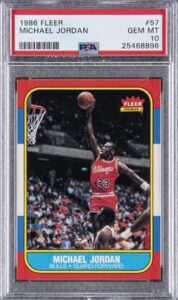
$738,000 (January 2021, Goldin)
Two PSA 10 copies of Jordan’s rookie sold for $738,000 on the same night. That alone was unusual, but the bigger story was how quickly the card had climbed.
Just a year earlier, PSA 10 examples were comfortably under $100,000. The sudden jump made it clear that even widely recognized cards with relatively larger populations could explode in value under the right conditions.
What followed made the result even more notable. Prices soon dropped back to around $200,000, reinforcing how inflated the market had become at its peak.
2000 Playoff Contenders Rookie Ticket Autograph Tom Brady #144 - PSA 10
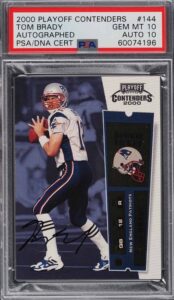
$2,880,000 (August 2021, PWCC)
This sale wasn’t just big, it was fast. A PSA 10 example of Brady’s Rookie Ticket Auto jumped to $2.88 million just months after a different PSA 10 example sold for $556,000.
Within two years, the same grade was selling $289,000 – a quick rise, and a sharper decline.
The card itself isn’t even the rarest version. The Championship Ticket parallel (/100) is rarer.
The speed of the increase is what shocked the hobby most. It highlighted how quickly prices could move when demand and narrative aligned.
1952 Topps Mickey Mantle #311 - SGC 9.5
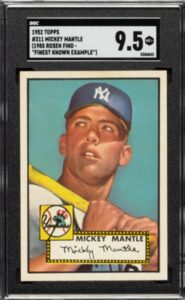
$12,600,000 (August 2022, Heritage)
When this Mantle sold for $12.6 million, it became the first sports card to break the eight-figure barrier. It smashed the record to become the most expensive sports card at the time.
Unlike some modern spikes, this result felt more stable. The 1952 Topps Mantle has long been one of the most iconic cards in the hobby, and this sale confirmed its place at the top.
It also showed that vintage cards, particularly those tied to legendary players, still carry unmatched long-term appeal.
2007-08 Upper Deck Exquisite Dual Logoman Autograph Michael Jordan & Kobe Bryant #DL-KM - PSA 6
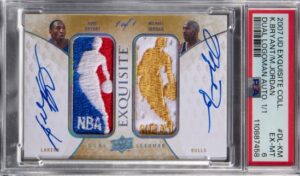
$12,932,000 (August 2025, Heritage)
Despite the star-power of this 1/1 dual Logoman autograph Jordan and Kobe card, it still came as a shock to see it sell for almost $13 million.
The appeal is clear: two of the biggest global icons, combined with dual Logoman patches and on-card autographs, but the hobby was used to seeing baseball’s most iconic cards holding the all-time record.
It again highlighted how modern ultra-rare cards can now compete directly with the most important vintage pieces.
1914 Baltimore News Babe Ruth - SGC 3
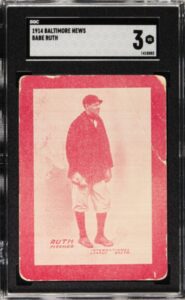
$4,026,000 (October 2025, Heritage)
Not every shocking sale is about a record. This one stood out because of the loss.
The same card sold for $7.2 million in 2023. Just two years later, it dropped to $4.026 million, a $3.2 million decline and the biggest known loss on a single sports card.
The card itself remains one of the most important in the hobby, considered by many to be Babe Ruth’s true rookie card. But this result highlighted the risks of buying at peak market levels.
2025 Topps Chrome Gold Logoman Autograph Relic Shohei Ohtani #GOLDA-SO - Ungraded
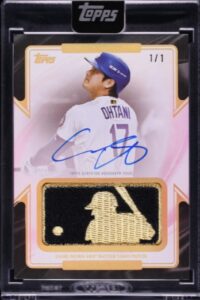
$3,000,000 (December 2025, Fanatics Collect)
Modern cards continue to push boundaries, and this 1/1 Ohtani Logoman is a clear example. Selling for $3 million while ungraded, it became one of the biggest modern-era results ever, and the second 7-figure card to feature Ohtani.
What made this shocking was the gap from his previous record. Before this sale, Ohtani’s top card sat at just over $1 million. This result nearly tripled that figure in one move.
It also reinforced the strength of ultra-premium modern cards, especially those featuring unique patches and autographs tied to global stars.
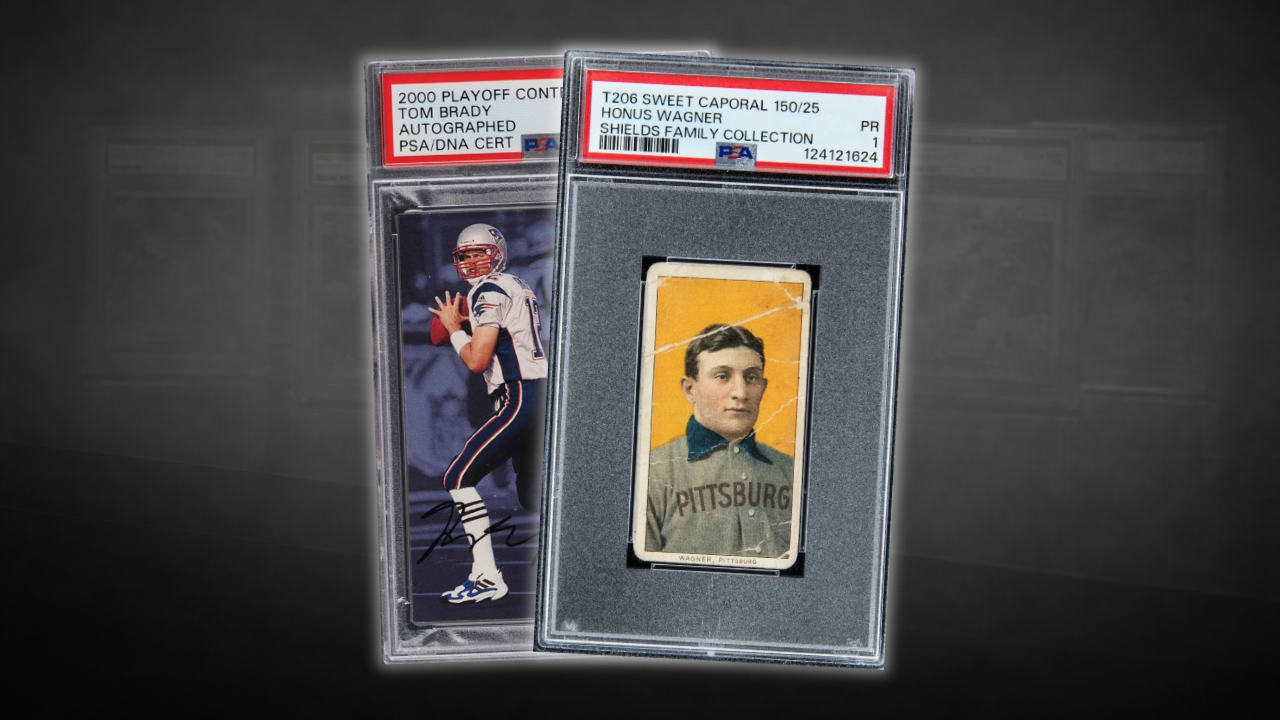
T206 Honus Wagner - PSA 1
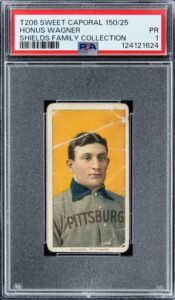
$5,124,000 (February 2026, Goldin)
Although this $5.124 million sale marked a significant jump from the previous PSA 1 T206 Wagner record of $3.136 million in 2022, the price itself wasn’t the biggest surprise, especially given the card’s track record of consistent long-term appreciation.
What shocked the hobby was the card’s existence.
With so few known examples, many believed every authentic T206 Wagner had already been accounted for. This copy surfaced unexpectedly, having remained with the same family for over a century after the grandfather pulled it all that time ago.
Despite its PSA 1 grade, it still became the third highest-selling T206 Wagner of all time.
These auctions stand out for different reasons. Some pushed the ceiling higher than anyone expected. Others showed how quickly values can change.
For collectors, they offer useful context. They highlight how timing, rarity, and demand all play a role, and why even the most established cards can still produce surprising results.